
This year marks a milestone for Sacred Spaces - ten years of growth from fledgling start-up to recognized field leader. After a decade of learning, building and partnering with Jewish leaders in the creation of safer communities, it was time for me to take a breath and for other leaders and team members to lead Sacred Spaces’ growth. With support from R&R, I took a three-month sabbatical in the summer of 2025; it was both a personal reset and an important step in Sacred Spaces’ evolution.
Preparing to Step Away
Under our organization’s policy, I had earned a sabbatical several years ago, but waited until our departments were highly functioning and we had done the work necessary to prepare for my absence. Each department created clear plans for my absence. Thanks to R&R’s generosity, we hired interim support and provided stipends to all staff and bonuses for those taking on additional responsibilities. Together with the team and board, we outlined how decisions would be made and when, if ever, I should be contacted. We were ready to give our organization’s sabbatical policy a test run.
Learning to Let Go
Even with planning, it took two weeks to truly disconnect as I intermittently tied up loose ends. That slow transition out of the office reinforced what I already knew: Sacred Spaces was in capable hands, and I could fully step away. At one point, during a playdate with a colleague and our children, I couldn’t resist asking how things were going. She smiled and said, “I could tell you, but I won’t.” That moment captured so much: confidence, care, and the kind of leadership that grows stronger when space is given.

Living the Pause
To avoid slipping back into work mode, I left town the first day of sabbatical. Our family spent three weeks in Hawaii, where we did our best to immerse ourselves in local culture, learning to surf, hiking volcanoes, and exploring marine life. It was our children’s first time so far from home, and we found new ways to live our Jewish life even on an island across the globe (amazingly we found kosher grape juice, chicken and even a farm!). Mostly, we learned to be still—to sit at the edge of the ocean and let the waves settle our souls.
When we returned, I decided to keep the children home from camp. For the first time, we had weeks of uninterrupted family life. Our days were long and active as a sort of joyful chaos reigned, and I felt my entire being resetting from the blessing of this time together.
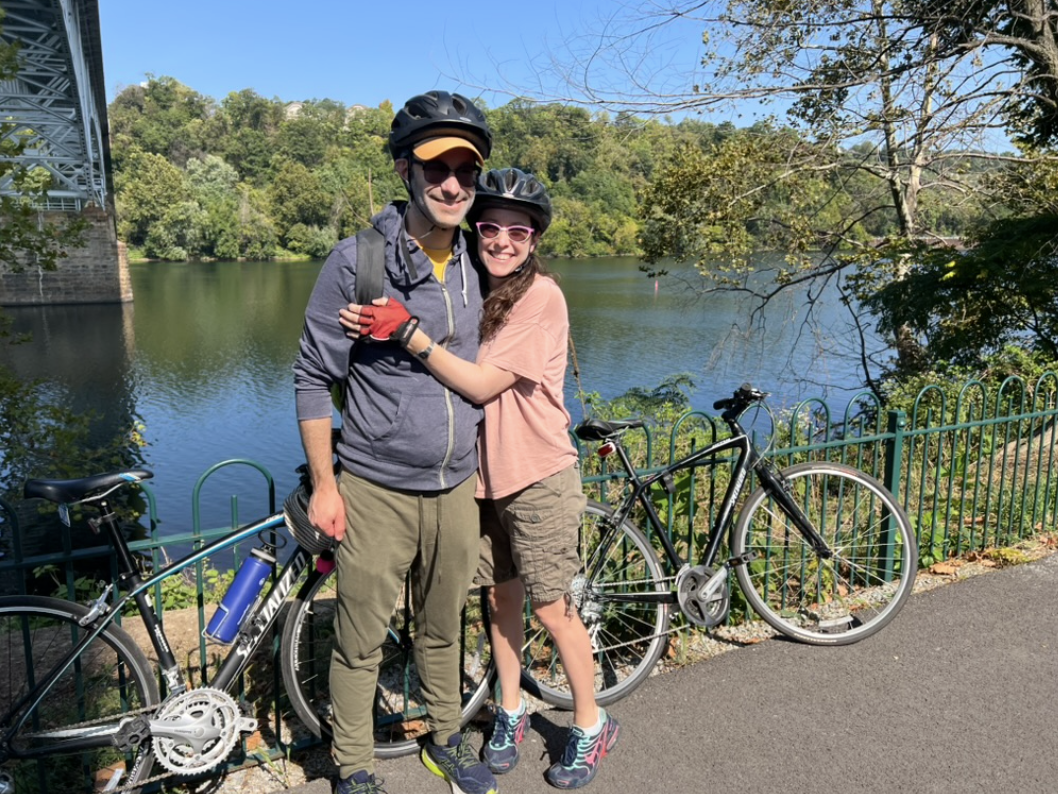
In the final stretch of sabbatical, I turned inward. I read long-awaited books, took up climbing and biked the GAP trail, organized long-ignored spaces, and discovered the quiet joy of domesticity. In that alone time, I found myself thinking differently, and challenges that had once felt intractable began to seem entirely solvable.
Returning with Gratitude
Coming back took time, too. My colleagues made sure my calendar stayed spacious those first couple of weeks—no travel, no external meetings—so I could listen, absorb, and reconnect. I expected the usual post-vacation overwhelm but instead found an inbox with just eleven emails! One colleague managed correspondence, others had fully owned projects, and together they’d documented the summer’s work in a detailed spreadsheet complete with links to memos on every significant project. At one meeting, I prepared to discuss a major project only to learn the team had already completed it. They had also navigated a significant funding opportunity, securing a new three-year grant, with ease and collaboration. Seeing Sacred Spaces thrive in my absence reminded me how much we’ve grown—not just in reach, but in talent and shared leadership. This organization is no longer a start-up built on a few shoulders; it’s a collective endeavor carried by numerous expert, smart, thoughtful hands.
What I Learned
1. Prepare gradually and trust. Preparing for sabbatical felt daunting. At times I wasn’t sure I could step away, and at other times, I felt I needed to just take the leap and go. Yet years of building shared leadership meant the foundation was already there; I just had to let it work.
2. Support makes rest possible. This sabbatical only worked because of my incredible colleagues, our board’s support, funders’ encouragement, and my coach’s guidance. Their partnership and care made both the departure and return seamless.
3. Rest renews purpose. Before leaving, I worried I might not want to return. Instead, I rediscovered how much I love this work. Life during sabbatical was full—family, friends, and involvement in numerous compelling pro bono initiatives. I realized quickly that time is a vacuum and can fill quickly with other people’s agendas or just day-to-day living. I felt a deep sense of appreciation that my daily work already reflects my deepest values.
4. Clarity replaces angst. Our work is complex and emotionally charged. Time away allowed my mind to rest and sharpen. I returned clearer on priorities, boundaries, and how to focus on what matters most. I returned with confidence that, as my team steps forward in their roles, I can fully embrace mine, focusing on strategy and vision, thought leadership, fundraising, board development, and supporting our team as we move from start-up to scale.
5. Sabbatical strengthens the whole. A sabbatical isn’t just about one person stepping back—it’s a chance for the entire organization to stretch and grow. While not without its challenges, it deepened trust, encouraged initiative, and proved that our mission continues through collective strength.
I’m profoundly grateful—to R&R, our board, partners, and especially to my colleagues—for investing in rest, in me, and in Sacred Spaces. Sabbatical has transformed the way I think about work for myself, for my team and for the clients we serve. Rest is not a break from work; it’s what allows the work to deepen.
Written by Shira Berkovits, President & CEO of Sacred Spaces.